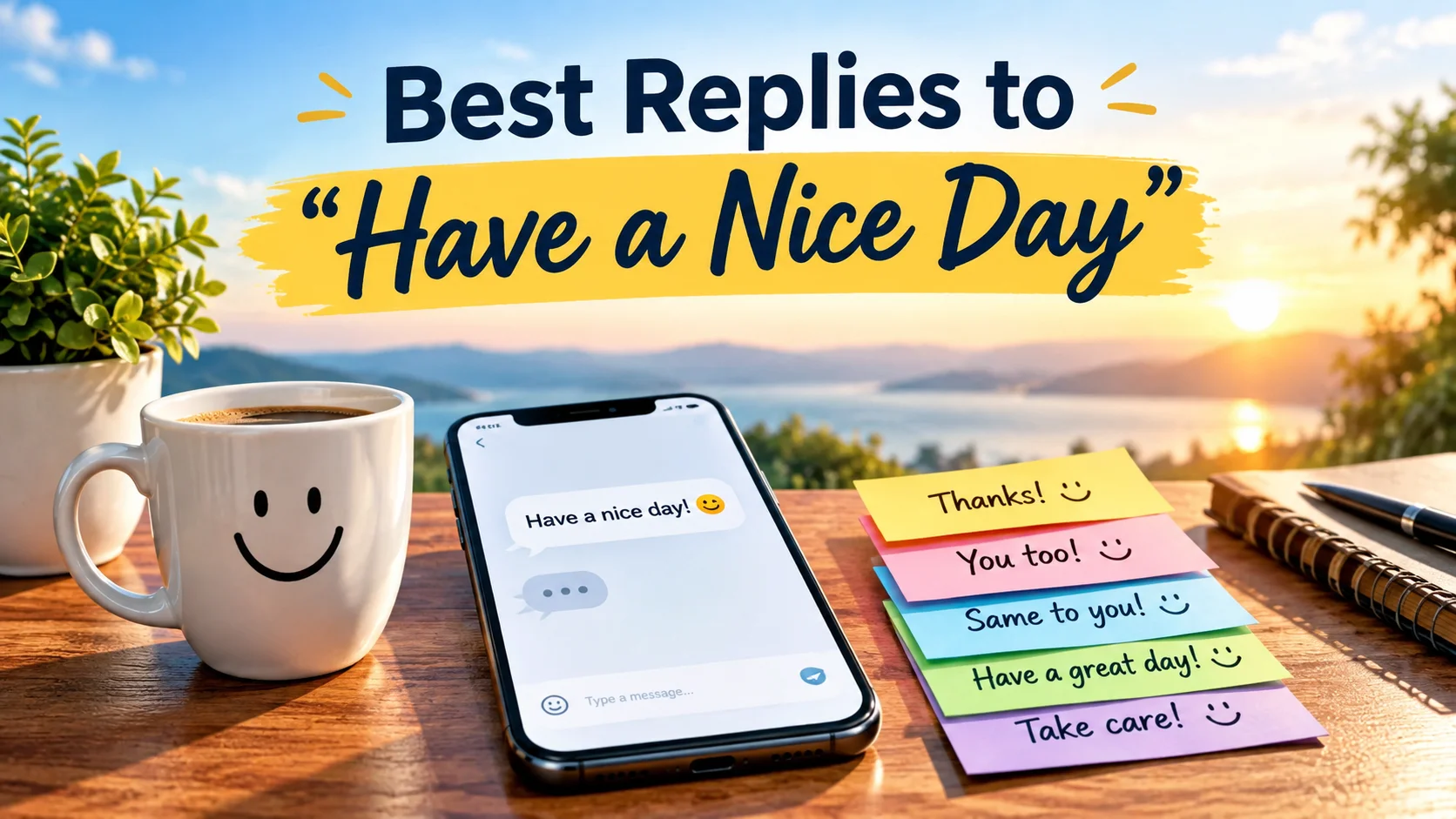
Best Replies to “Have a Nice Day” should match your tone, situation, and relationship so every simple response feels natural, warm, and thoughtful. When someone tells You to have a nice day, a simple “Thanks, you too” can say “good day” while using the right words. A polite, friendly, and fun reply shows respect and kindness, helping people feel happy and appreciated.
In small conversations, even small words can make a meaningful difference. Many people may think short replies sound boring or automatic, but better replies can help you stand out as smart, warm, and thoughtful.
A friendly reply can bring a smile and create a positive moment during everyday life. At work, a professional or funny response may help you connect with friends, teachers, or strangers. Choosing the right reply takes care, and practicing different responses can improve your social skills during everyday talks.
In communication, the response, social setting, and situation all matter. A reply that works at the workplace might not suit a personal chat, so look for helpful ways to keep the interaction natural. When someone says “Have a nice day,” you can answer with “You too,” “Thanks, have a great day,” or “Thanks, nice talking to you,” depending on what happens next.
With new friends, a kind, casual, or playful reply can add humor without becoming complicated.
Lets Dive In:
1. “You Too!”
The easiest response is often the best one. “You too!” is friendly, natural, and works in almost any everyday situation. It returns the good wish without making the conversation unnecessarily complicated.
This is especially useful when someone says “Have a nice day” while leaving a store, ending a conversation, finishing a phone call, or wrapping up a casual chat.
Meaning
You are returning the same positive wish to the other person.
Tone
Friendly, polite, casual.
Example
Coworker: I’m heading out. Have a nice day!
You: You too!
Best Use
Everyday conversations, coworkers, acquaintances, customer interactions, and texting.
2. “Thanks, You Too!”
Adding “Thanks” makes the response sound slightly warmer than simply saying “You too.” It acknowledges that the person took a moment to wish you well.
Meaning
You appreciate their kindness and wish them a pleasant day in return.
Tone
Warm, polite, friendly.
Example
Cashier: Have a nice day!
You: Thanks, you too!
Best Use
Stores, restaurants, workplaces, casual conversations, and polite everyday interactions.
3. “Thank You! I Hope You Have a Great Day Too.”
Sometimes a little extra warmth is appropriate. This response feels genuine without becoming overly formal.
Meaning
You appreciate the person’s kind words and sincerely return the sentiment.
Tone
Warm, respectful, thoughtful.
Example
Neighbor: Have a nice day!
You: Thank you! I hope you have a great day too.
Best Use
Neighbors, acquaintances, older people, colleagues, and friendly face-to-face conversations.
4. “I Will — You Do the Same!”
This response adds a little personality to the standard exchange. It works particularly well when the conversation is relaxed.
Meaning
You accept their good wish while sending one back.
Tone
Friendly, upbeat, conversational.
Example
Friend: Have a nice day!
You: I will — you do the same!
Best Use
Friends, family, coworkers, and casual texting.
5. “Thanks! I’ll Try My Best.”
If you want a lighthearted response without being sarcastic, this one works nicely.
Meaning
You playfully suggest that having a great day is now your mission.
Tone
Playful, casual, cheerful.
Example
Friend: Have a nice day!
You: Thanks! I’ll try my best.
Best Use
Friends, casual chats, and relaxed text conversations.
6. “You Too — Take Care!”
This adds a little more warmth than a basic “You too.” It can make the end of a conversation feel friendly and considerate.
Meaning
You wish them well and encourage them to look after themselves.
Tone
Warm, caring, polite.
Example
Coworker: Have a nice day. See you tomorrow!
You: You too — take care!
Best Use
Coworkers, friends, neighbors, and people you know reasonably well.
7. “Thanks! Hope Your Day Goes Even Better.”
This is a nice choice when the person has already had a busy or difficult morning.
Meaning
You are returning their kindness while wishing them an especially good rest of the day.
Tone
Thoughtful, encouraging, friendly.
Example
Friend: I have a long afternoon ahead. Have a nice day!
You: Thanks! Hope your day goes even better.
Best Use
Friends, colleagues, and supportive conversations.
8. “You Too! Make It a Good One.”
This sounds energetic and natural, especially in casual conversations.
Meaning
You are returning the good wish while encouraging them to enjoy their day.
Tone
Positive, casual, upbeat.
Example
Coworker: Have a nice day!
You: You too! Make it a good one.
Best Use
Workplace chats, friends, casual acquaintances, and texting.
9. “Thanks! That’s the Plan.”
For a confident but relaxed response, “That’s the plan” is a fun alternative to the usual “you too.”
Meaning
You agree with the person’s wish and playfully confirm that you’re planning to enjoy your day.
Tone
Confident, casual, playful.
Example
Friend: Have a nice day!
You: Thanks! That’s the plan.
Best Use
Friends, coworkers, and informal conversations.
10. “I Hope You Do Too!”
This response puts slightly more emphasis on the other person.
Meaning
You genuinely want the other person to have a good day as well.
Tone
Friendly, warm, sincere.
Example
Neighbor: Have a nice day!
You: Thank you! I hope you do too!
Best Use
Face-to-face conversations, neighbors, acquaintances, and friendly messages.
Rrad This: 25 Funny Roasts for Your Sister That Keep Sibling Rivalry Hilarious
11. “Thanks! I’ll Keep That in Mind.”
This is a playful response when you want to acknowledge the wish without simply repeating it.
Meaning
You are humorously treating “have a nice day” like useful advice.
Tone
Playful, clever, light.
Example
Friend: Have a nice day!
You: Thanks! I’ll keep that in mind.
Best Use
Close friends and relaxed conversations where humor is already part of the relationship.
12. “You Too — Hopefully It’s a Good One!”
This feels natural when you want to sound friendly but not overly enthusiastic.
Meaning
You return the wish while keeping the conversation relaxed.
Tone
Casual, friendly, conversational.
Example
Coworker: I’m off to my next meeting. Have a nice day!
You: You too — hopefully it’s a good one!
Best Use
Work, casual conversations, and texting.
13. “Thanks! I’m Planning on It.”
This is a confident alternative to “You too.” It can sound especially natural in a text conversation.
Meaning
You appreciate the message and confidently intend to enjoy your day.
Tone
Confident, playful, casual.
Example
Friend: Have a nice day!
You: Thanks! I’m planning on it.
Best Use
Friends, texting, and informal conversations.
14. “That’s Sweet of You. Thank You!”
When someone’s message feels particularly kind, acknowledge the kindness rather than automatically replying with “you too.”
Meaning
You are recognizing the thought behind their words.
Tone
Warm, appreciative, sincere.
Example
Friend: You’ve been working really hard lately. Have a nice day!
You: That’s sweet of you. Thank you!
Best Use
Friends, family, supportive conversations, and personal messages.
15. “Thanks! Wishing You an Even Better Day.”
This is a polished response that still sounds human and warm.
Meaning
You appreciate their kindness and send an equally positive wish back.
Tone
Thoughtful, warm, polished.
Example
Colleague: Have a nice day!
You: Thanks! Wishing you an even better day.
Best Use
Professional relationships, acquaintances, and polite personal conversations.
16. “You Too 😊”
Sometimes the best response is short, especially over text. An emoji can make the message feel warmer without adding unnecessary words.
Meaning
You are returning the good wish in a friendly way.
Tone
Casual, friendly, cheerful.
Example
Them: Have a nice day!
You: You too 😊
Best Use
Texting, messaging apps, friends, and casual conversations.
Quick tip: Match the other person’s communication style. If they normally text without emojis, you don’t need to add one just to make the response seem friendlier.
17. “Thanks! You Just Made My Day a Little Better.”
This response works when the person’s message genuinely brightened your mood.
Meaning
You are telling them their kindness had a positive effect on you.
Tone
Warm, appreciative, slightly personal.
Example
Them: Have a wonderful day!
You: Thanks! You just made my day a little better.
Best Use
Friends, someone you’re getting to know, or a genuinely thoughtful conversation.
18. “I’ll Do My Best. You Have a Good One Too!”
This combines humor with a sincere response.
Meaning
You accept the good wish while returning it naturally.
Tone
Friendly, playful, sincere.
Example
Friend: Have a nice day!
You: I’ll do my best. You have a good one too!
Best Use
Friends, family, coworkers, and casual texting.
19. “Thanks! Same to You.”
If you want something slightly more polished than “You too,” this is a great choice.
Meaning
You are politely returning the same good wish.
Tone
Polite, neutral, friendly.
Example
Customer: Have a nice day!
You: Thanks! Same to you.
Best Use
Customer service, professional settings, acquaintances, and everyday interactions.
20. “You Too — Enjoy the Rest of Your Day!”
This is especially appropriate when it’s already later in the day.
Meaning
You are returning the good wish while referring naturally to the remaining part of their day.
Tone
Warm, polite, considerate.
Example
Coworker: I’m leaving early today. Have a nice day!
You: You too — enjoy the rest of your day!
Best Use
Workplaces, afternoon conversations, customer interactions, and casual situations.
21. “Thanks! Hope Something Great Happens Today.”
If you want to sound more thoughtful than simply repeating “have a nice day,” this response adds a positive twist.
Meaning
You are wishing them more than an ordinary day.
Tone
Positive, thoughtful, encouraging.
Example
Friend: Have a nice day!
You: Thanks! Hope something great happens today.
Best Use
Friends, supportive messages, family, and personal conversations.
22. “I Hope It’s a Great One for Both of Us.”
This can be a charming response when you’re speaking with someone you have a warm connection with.
Meaning
You are turning the individual good wish into a shared positive sentiment.
Tone
Warm, playful, slightly affectionate.
Example
Them: Have a nice day!
You: I hope it’s a great one for both of us.
Best Use
Someone you’re close to, a friendly coworker, or a person you’re getting to know.
23. “Thanks! I’ll Take That as a Challenge.”
For playful conversations, this response turns a simple farewell into a small joke.
Meaning
You are joking that having a nice day is now something you intend to accomplish.
Tone
Funny, playful, confident.
Example
Friend: Have a nice day!
You: Thanks! I’ll take that as a challenge.
Best Use
Close friends and people who understand your humor.
Watch the tone: Avoid this with someone you barely know if your humor might be misunderstood.
24. “Thanks! Same Energy Back to You.”
This is a more modern, casual way of returning someone’s positive message.
Meaning
You are playfully sending the same good energy back.
Tone
Casual, upbeat, playful.
Example
Friend: Have a nice day!
You: Thanks! Same energy back to you.
Best Use
Texting, social conversations, friends, and informal online chats.
25. “Thank You. I Hope Your Day Is Kind to You Too.”
When you want a response that feels genuinely thoughtful, this is a beautiful alternative to the standard reply.
Meaning
You are returning the person’s kindness with a sincere wish for their well-being.
Tone
Warm, thoughtful, gentle, sincere.
Example
Them: Have a nice day. Take care.
You: Thank you. I hope your day is kind to you too.
Best Use
Meaningful conversations, friends, family, supportive messages, and situations where a warmer response feels appropriate.
FAQs:
What is the best reply to “Have a nice day”?
The safest and most natural response is “Thanks, you too!” It works in casual, professional, and everyday situations without sounding forced.
How can I respond politely to “Have a nice day”?
Try “Thank you. I hope you have a great day too” or “Thanks, same to you.” These responses show appreciation while returning the person’s good wishes.
What is a funny response to “Have a nice day”?
For a light joke, you could say “Thanks! I’ll do my best” or “I’ll take that as a challenge.” Use humorous replies mainly with people who already understand your sense of humor.
What should I text someone who says “Have a nice day”?
For a casual text, “You too 😊”, “Thanks! You too!”, or “Thanks! That’s the plan” all sound natural.
How do I respond to “Have a nice day” from a coworker?
Keep it friendly and professional. “Thanks, you too!”, “You too — have a good one,” or “Thanks! Enjoy the rest of your day” are good choices.
Conclusion:
Finding the Best Replies to “Have a Nice Day” does not have to be difficult. A simple “Thanks, you too!” can work in most situations, but the best response depends on the person, setting, and tone. With friends, you can use a funny, casual, or playful reply to keep the conversation light. At work, a polite and professional response usually feels more appropriate. In texts or personal chats, a warm and thoughtful answer can make the other person feel appreciated.
The key is to avoid trying too hard. Natural words often leave a stronger impression than complicated expressions. A little kindness, respect, and friendliness can turn a short exchange into a positive moment.
Whether someone says it at school, home, work, or anywhere else, you can respond in a way that feels genuine. Choose words that match the situation, show appreciation, and keep the interaction comfortable. With a little practice, replying naturally becomes an easy part of everyday communication.













1 thought on “25 Best Replies to “Have a Nice Day” for Every Kind of Conversation”