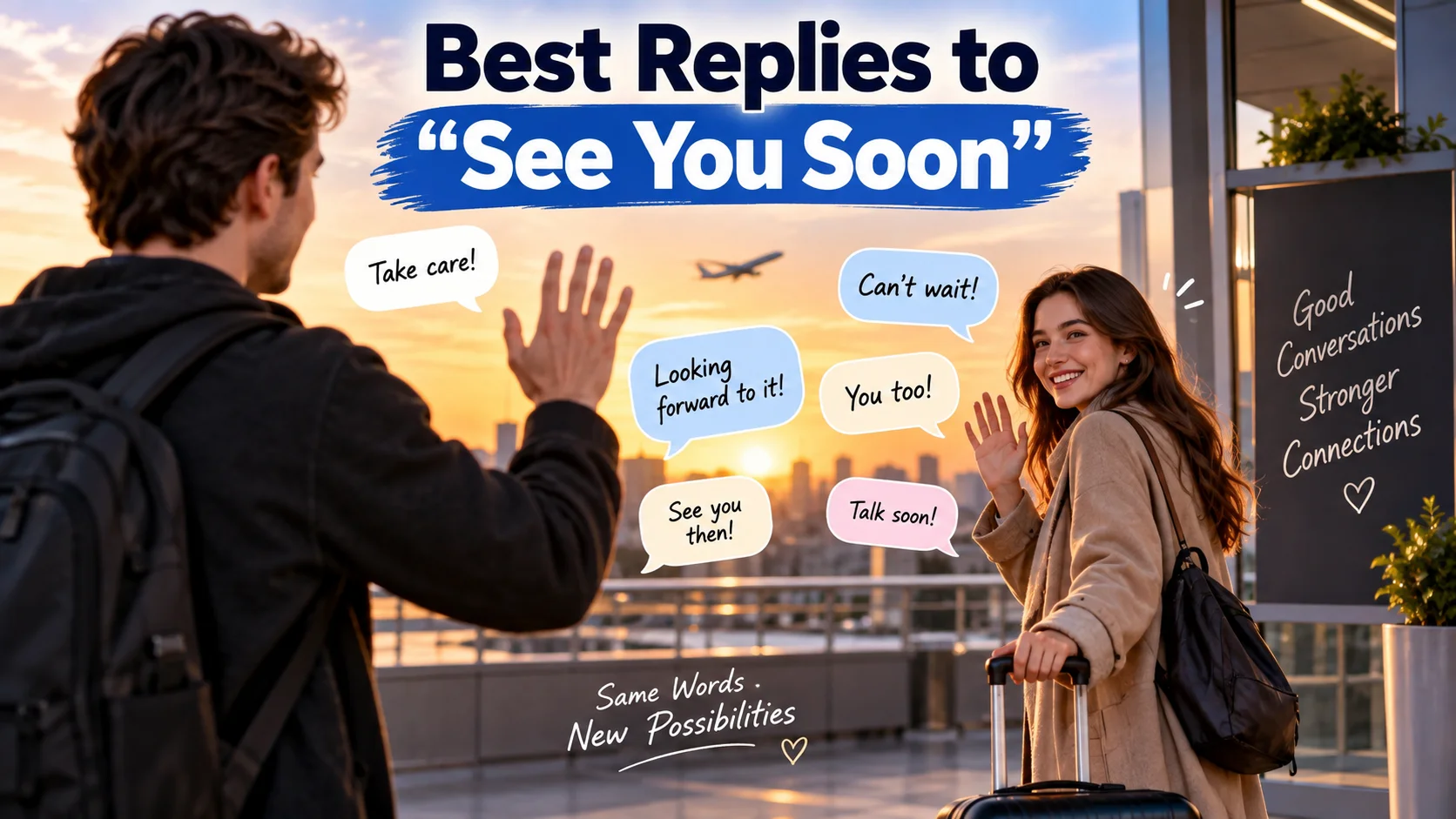
For Best Replies to “See You Soon” TITLE, the best response depends on your tone, relationship, person, and the simple phrase used in conversation. When I choose a reply, I consider whether the situation is casual or professional and what the response should convey. With casual friends,
Can’t wait or I can’t wait to see you soon can express warm feelings and emotions, while business acquaintances may need a polished response style suited to the business context. You can respond with cute or beautiful words, try different ways to respond to “See You Soon”, and let your answer shape the conversation, communication, and social interaction naturally, especially when you are caught off guard.
For people who are apart because of work, school, or the daily grind, see you soon messages, miss you messages, and see you soon quotes can bridge the gap during moments of distance.
A heartfelt message can remind someone you are thinking of them and counting down the moments until you are together again. These words and reminders of love, hope, and connection can make distance less overwhelming, strengthen relationships, and show how much you miss someone.
Lets Dive:
1. “Can’t Wait!”
This is one of the easiest ways to show genuine excitement about seeing someone again. It works especially well when you’re already looking forward to the meeting and don’t want your response to sound overly complicated.
Meaning
It tells the other person that you’re excited about seeing them and are looking forward to the upcoming meeting.
Tone
Warm, enthusiastic, friendly
Example
Friend: I’ll see you soon!
You: Can’t wait! It’ll be great to catch up.
Best Use
Use it with friends, family, someone you’re dating, or anyone you’re genuinely excited to see.
2. “See You Then!”
When you want a simple, natural reply, “See you then!” is hard to beat. It confirms that you’ve understood the plan without adding unnecessary words.
Meaning
It communicates that you’re expecting to see the person at the agreed time or place.
Tone
Casual, friendly, confident
Example
Coworker: I’ll stop by your office after lunch. See you soon!
You: Sounds good. See you then!
Best Use
This works particularly well for everyday conversations, appointments, casual plans, and workplace messages.
3. “Looking Forward to It!”
This response adds a little more warmth than a basic “you too.” It shows that the upcoming meeting matters to you.
Meaning
You’re expressing positive anticipation about whatever you’re going to do together.
Tone
Warm, polite, positive
Example
Friend: We’ll grab coffee tomorrow. See you soon!
You: Definitely. Looking forward to it!
Best Use
Use it when you want to sound sincere without being overly casual.
4. “You Too—Take Care!”
Sometimes the best response is friendly but uncomplicated. Adding “take care” gives the conversation a warm ending.
Meaning
You’re returning the sentiment while also wishing the person well until you meet again.
Tone
Friendly, caring, polite
Example
Neighbor: See you soon!
You: You too—take care!
Best Use
This is suitable for neighbors, acquaintances, friends, family members, and everyday conversations.
5. “Absolutely. See You Soon!”
If you want to sound confident and positive, this response works without feeling overly enthusiastic.
Meaning
“Absolutely” reinforces that you’re happy with the plan and fully expect to see the person soon.
Tone
Confident, friendly, upbeat
Example
Friend: I’ll be there around seven. See you soon!
You: Absolutely. See you soon!
Best Use
Use it when plans are already settled and you want a positive confirmation.
6. “I’ll Be Waiting!”
This one adds personality and can be playful when used with someone you’re comfortable with.
Meaning
It communicates that you’re looking forward to the person’s arrival, sometimes with a teasing or affectionate undertone.
Tone
Playful, warm, slightly flirty
Example
Partner: Heading your way now. See you soon!
You: I’ll be waiting!
Best Use
Best for romantic partners, close friends, or playful conversations. Avoid it in formal workplace situations.
7. “Hurry Up!”
Used carefully, this can turn a normal goodbye into a playful message. The relationship matters here because the words could sound impatient without the right context.
Meaning
You’re jokingly saying that you’re eager to see the person and don’t want them to take too long.
Tone
Playful, teasing, casual
Example
Friend: I’ll see you soon.
You: Hurry up, then. 😂
Best Use
Use it with close friends or someone who understands your sense of humor. A laughing emoji can make the playful intention clearer in a text.
8. “Already Looking Forward to Seeing You!”
This response is warmer than a standard confirmation and works when you want to make your enthusiasm obvious.
Meaning
It tells the other person that you’re genuinely excited about the upcoming meeting.
Tone
Warm, affectionate, enthusiastic
Example
Date: I’ll see you this weekend.
You: Already looking forward to seeing you!
Best Use
Great for dating, close friendships, family, and other relationships where showing enthusiasm feels natural.
9. “You Better!”
This short reply can be a fun way to tease someone while confirming that you expect them to follow through.
Meaning
You’re playfully insisting that they actually come back or meet you as promised.
Tone
Teasing, confident, playful
Example
Friend: Don’t worry, I’ll see you soon.
You: You better! 😄
Best Use
Best among close friends or people who already have a joking relationship.
Watch the tone: Without a friendly relationship or playful context, this can sound demanding rather than funny.
10. “Can’t Wait to See You Again.”
If you’re speaking to someone you genuinely missed, this response communicates more emotion than a basic “see you soon.”
Meaning
You’re expressing that you enjoyed being with the person before and are happy about seeing them again.
Tone
Warm, affectionate, sincere
Example
Someone you care about: I’ll be back next week. See you soon!
You: Can’t wait to see you again.
Best Use
Appropriate for partners, close friends, family, and people you haven’t seen for a while.
11. “Deal!”
Sometimes a single word says enough. “Deal!” feels energetic and confirms that you’re both on the same page.
Meaning
It means you’re agreeing to the plan and looking forward to following through.
Tone
Casual, upbeat, confident
Example
Friend: Dinner Friday?
You: Deal!
Friend: See you soon.
You: Looking forward to it!
Best Use
Excellent for casual plans with friends, colleagues you know well, or family.
12. “See You in a Bit!”
If the person really is going to arrive shortly, this sounds more natural than repeating “see you soon.”
Meaning
You’re acknowledging that the meeting is happening very shortly.
Tone
Casual, relaxed, friendly
Example
Friend: Leaving now. See you soon!
You: Perfect. See you in a bit!
Best Use
Use it when you’re expecting to see the person within a relatively short time.
13. “I’ll Be There!”
This is useful when the conversation involves a specific event, meeting, or gathering.
Meaning
It confirms your attendance and lets the other person know they can expect you.
Tone
Direct, confident, reassuring
Example
Friend: We’re meeting at eight. See you soon!
You: I’ll be there!
Best Use
Good for plans, parties, dinners, meetings, and group activities.
14. “Until Then!”
For something slightly more polished without becoming stiff, “Until then!” is a nice alternative.
Meaning
It acknowledges that you’ll meet again at a later time.
Tone
Polite, warm, composed
Example
Acquaintance: It was lovely talking with you. See you soon.
You: Absolutely. Until then!
Best Use
Suitable for acquaintances, social events, professional contacts, and moderately formal conversations.
15. “You Know Where to Find Me.”
This response has a relaxed, confident feel. It suggests that the door is open without directly asking the person to make plans.
Meaning
You’re telling someone that you’re available and they know how to reach or meet you.
Tone
Confident, casual, slightly playful
Example
Friend: I’ll see you soon.
You: You know where to find me.
Best Use
Works best with friends or someone you’re comfortable joking with.
16. “I’ll Hold You to That!”
This is a clever response when “see you soon” sounds like a promise.
Meaning
You’re playfully saying that you expect the person to actually follow through.
Tone
Playful, teasing, confident
Example
Friend: We definitely need to hang out again soon.
You: I’ll hold you to that!
Best Use
Great for friends, casual acquaintances, and playful conversations.
Better choice: Use it when you genuinely want another meeting. Otherwise, it can sound more serious than intended.
17. “Make It Soon!”
If you want to show enthusiasm without writing a long message, this is a fun alternative.
Meaning
You’re encouraging the person not to leave the next meeting too far in the future.
Tone
Playful, eager, friendly
Example
Friend: See you soon!
You: Make it soon!
Best Use
Good for friends, family, and casual relationships.
18. “I’ll Look Forward to Seeing You.”
A slightly more polished version of “looking forward to it,” this works well when you want to sound professional or respectful.
Meaning
It expresses positive anticipation while keeping the conversation appropriately composed.
Tone
Professional, polite, warm
Example
Client: I’ll see you at the meeting next week.
You: Certainly. I’ll look forward to seeing you.
Best Use
Ideal for work, clients, business contacts, teachers, mentors, and other professional situations.
19. “Same Here!”
When you want a very short text response, “Same here!” is natural and effortless.
Meaning
You’re saying that you also look forward to seeing the person.
Tone
Casual, friendly, relaxed
Example
Friend: See you soon! 😊
You: Same here! 😊
Best Use
Perfect for texting, social media messages, friends, family, and casual conversations
20. “Don’t Keep Me Waiting.”
This is a playful option that can have a slightly flirty edge depending on the relationship.
Meaning
You’re teasing the other person while suggesting that you’re eager to see them.
Tone
Playful, teasing, flirty
Example
Date: I’m leaving now. See you soon.
You: Don’t keep me waiting. 😉
Best Use
Best for dating or close relationships where playful teasing is already comfortable.
Watch the tone: Avoid it with coworkers or people you don’t know well because it may sound demanding or overly personal.
21. “I’ll Count on It!”
This response adds a little confidence to the conversation.
Meaning
You’re taking the other person’s statement seriously and expecting the planned meeting to happen.
Tone
Confident, positive, slightly formal
Example
Friend: I promise I’ll visit soon.
You: I’ll count on it!
Best Use
Useful with friends, family, colleagues, or anyone making a definite promise to meet.
22. “Same Time, Same Place?”
Instead of simply responding, this turns the message into a practical confirmation.
Meaning
You’re checking whether the next meeting will happen at the same time and location.
Tone
Casual, practical, direct
Example
Friend: See you soon!
You: Same time, same place?
Best Use
Excellent when plans are somewhat understood but you want to make sure everyone has the details right.
23. “Looking Forward to Catching Up.”
This is especially natural when you haven’t spoken to someone for a while.
Meaning
You’re expressing interest in reconnecting and having a proper conversation.
Tone
Warm, friendly, sincere
Example
Old friend: I’ll be in town next weekend. See you soon!
You: Looking forward to catching up!
Best Use
Great for old friends, former coworkers, relatives, and acquaintances you haven’t seen recently
24. “See You—Don’t Be Late!”
This combines friendliness with a little teasing.
Meaning
You’re confirming the meeting while jokingly reminding the person to arrive on time.
Tone
Funny, playful, teasing
Example
Friend: See you at 7!
You: See you—don’t be late this time! 😂
Best Use
Use this with friends or people who are comfortable with your humor.
25. “Until I See That Familiar Face Again.”
For a more creative or affectionate response, you can step away from everyday phrases.
Meaning
It expresses warmth and suggests that you’re genuinely happy about seeing the person again.
Tone
Affectionate, sentimental, creative
Example
Close friend: I’ll see you soon.
You: Until I see that familiar face again. Take care!
Best Use
Best for close friends, family members, romantic relationships, or emotional farewells.
Keep in mind: This is intentionally more expressive than normal texting, so it may feel too sentimental in a casual workplace conversation.
FAQs:
What is the best reply to “See You Soon”?
“See you then!” is one of the safest natural replies because it is friendly, simple, and works in many everyday situations. If you’re genuinely excited, “Can’t wait!” or “Looking forward to it!” adds more enthusiasm.
How do I give a polite response to “See You Soon”?
Try “Absolutely, see you then,” “Looking forward to it,” or “Until then!” These responses are respectful without sounding overly formal.
What is a funny response to “See You Soon”?
“You better!”, “Hurry up, then 😂,” or “Don’t be late!” can work among friends. Humor depends heavily on your relationship, so avoid teasing someone who may take the message literally.
What should I text someone I like after they say “See You Soon”?
A lightly flirty response such as “Can’t wait to see you again,” “I’ll be waiting 😉,” or “Make it soon” can show interest without becoming too intense.
Is “You too” a good response to “See You Soon”?
Yes. “You too!” is short, natural, and appropriate in many casual conversations. You can make it warmer by saying “You too! Looking forward to it.”
Conclusion:
The best replies to “See You Soon” aren’t necessarily the cleverest ones. They simply fit the moment. A short “See you then!” can be perfect for a casual plan, while “Can’t wait to see you again” feels better when you’re genuinely excited.
At work, keep things clear and professional; with close friends, you have more room for humor and teasing.
The easiest rule is to match the other person’s energy while staying true to your own personality. If you’re ever unsure, choose warmth and simplicity. A natural response will almost always sound better than a line that feels forced.











1 thought on “25 Best Replies to “See You Soon” Everyone Will Love”