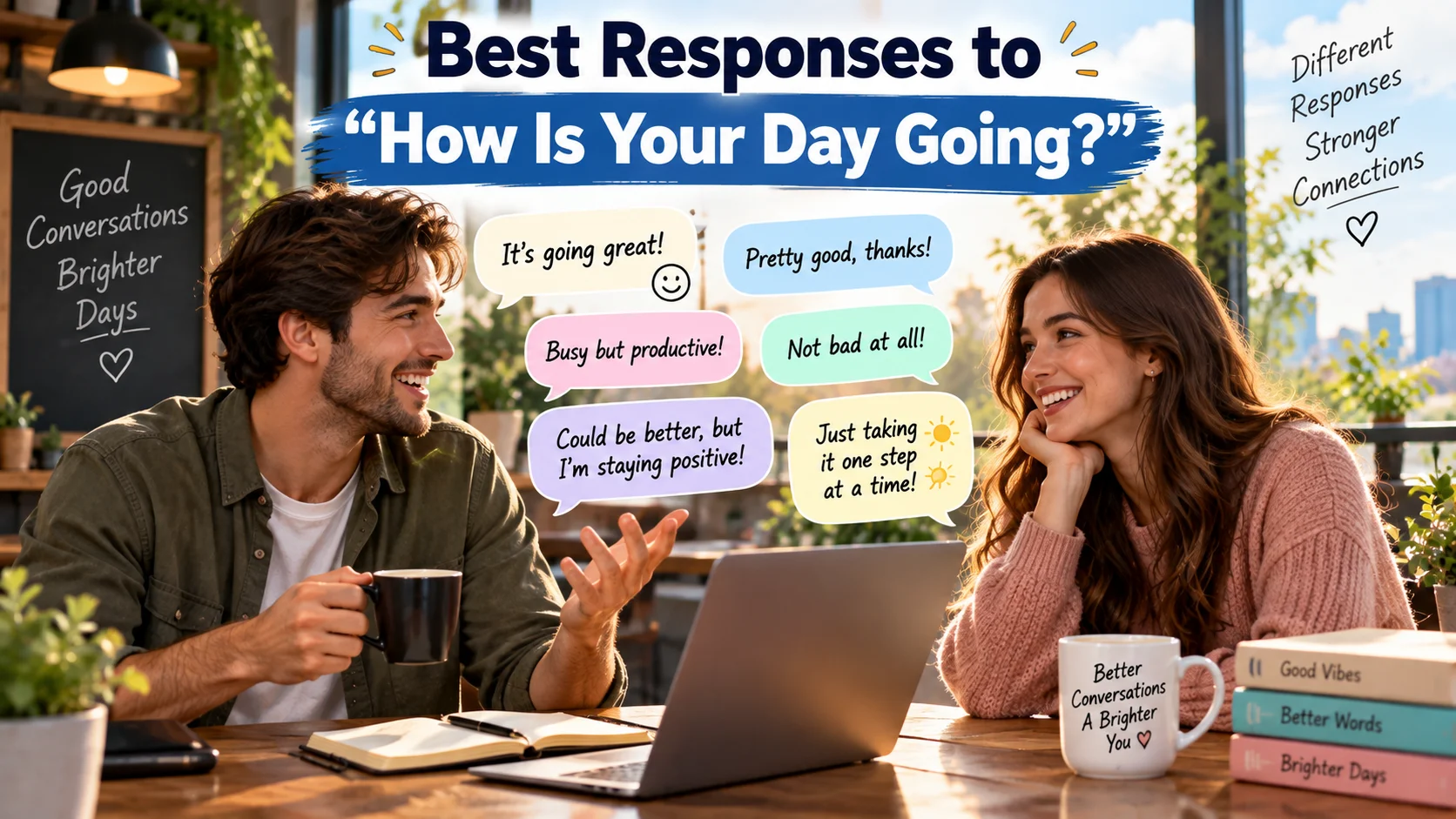
“How is your day going?” sounds like a simple question, but your answer can say much more than whether you’re having a good or bad day. A quick “Good” works in some conversations, while a warmer, funnier, more honest, or even slightly flirty response may fit better in others.
The right answer depends on who is asking, how well you know them, and what kind of conversation you want to have.
A coworker may deserve a professional response, while a close friend might appreciate a joke or an honest update. If someone you like asks, you may even want to use the question as an opening to keep the conversation going.
Here are natural responses to “How is your day going?” organized by situation, tone, and purpose, with examples showing how each one can actually sound in conversation.
Read This: 25 Best Replies to “See You Soon” Everyone Will Love
1. “It’s Going Pretty Well, Thanks!”
This is one of the safest responses when your day has been reasonably good and you want to acknowledge the person’s kindness without turning the conversation into a long update. It sounds friendly without being overly enthusiastic.
Meaning
You’re saying that things are going well while leaving room for the other person to continue the conversation.
Tone
Friendly, polite, casual.
Example
Coworker: How is your day going?
You: It’s going pretty well, thanks! How about yours?
Best Use
Use this with coworkers, acquaintances, friends, neighbors, or almost anyone making casual conversation.
2. “Honestly, It’s Been a Long One.”
Sometimes the best answer is an honest one. This response lets someone know that your day has been tiring without immediately unloading every problem you’ve encountered.
Meaning
You’re gently communicating that the day has been difficult, busy, or exhausting.
Tone
Honest, casual, slightly tired.
Example
Friend: How is your day going?
You: Honestly, it’s been a long one. I’m definitely ready for the evening.
Best Use
Good for friends, family members, coworkers you know well, or casual texting.
Quick tip: This answer often encourages the other person to ask what happened, so use it when you’re comfortable continuing the conversation.
3. “Better Now That I’m Talking to You.”
This response turns an ordinary question into something warmer. It can be affectionate or flirty depending on your relationship and delivery.
Meaning
You’re suggesting that talking to the person has improved your mood.
Tone
Warm, playful, flirty.
Example
Them: How is your day going?
You: It was pretty ordinary, but better now that I’m talking to you.
Best Use
Best for someone you’re dating, interested in, or already comfortable flirting with.
Watch the tone: With someone you barely know, this may come across as more forward than intended.
4. “Busy, But I’m Getting Through It.”
When your day is packed, you don’t need to explain every task on your schedule. This short answer gives an honest update while keeping the conversation moving.
Meaning
You’re busy or under pressure, but you’re managing.
Tone
Calm, practical, confident.
Example
Colleague: How is your day going?
You: Busy, but I’m getting through it. Just trying to finish a few things before lunch.
Best Use
Especially useful at work, but it also works with friends and family.
5. “So Far, So Good.”
This classic response is short, natural, and flexible. It suggests that nothing has gone seriously wrong and that you’re cautiously optimistic about the rest of the day.
Meaning
The day is going reasonably well up to this point.
Tone
Casual, relaxed, neutral.
Example
Friend: How’s your day going?
You: So far, so good. I’m hoping it stays that way.
Best Use
Text messages, casual conversations, coworkers, friends, and acquaintances.
6. “A Little Chaotic, But I’m Surviving.”
If your day has been messy but you don’t want to sound overly negative, this gives your answer some personality.
Meaning
Things have been hectic, but you’re handling the situation.
Tone
Funny, casual, slightly dramatic.
Example
Friend: How is your day going?
You: A little chaotic, but I’m surviving. My coffee deserves most of the credit.
Best Use
Friends, casual texting, and social conversations.
7. “It’s Going Great! What About You?”
When your day really is going well, there’s no need to make the response complicated. Adding a question back makes the exchange feel more conversational.
Meaning
You’re positive about your day and interested in hearing about theirs.
Tone
Friendly, upbeat, engaging.
Example
Friend: How is your day going?
You: It’s going great! I finally finished something I’ve been working on. What about you?
Best Use
Friends, family, coworkers, and casual messages.
8. “Could Be Better, But I’ll Be Fine.”
Not every difficult day needs a detailed explanation. This response is useful when you want to be truthful while signaling that you don’t necessarily want to discuss the problem.
Meaning
You’re having a less-than-great day, but you’re managing.
Tone
Honest, reserved, calm.
Example
Friend: How’s your day going?
You: Could be better, but I’ll be fine. Just one of those days.
Best Use
When someone you know is checking on you but you want to keep the conversation relatively light.
9. “Surprisingly Good!”
A little enthusiasm can make a basic answer much more interesting. This response is particularly natural when you expected the day to go badly but things worked out.
Meaning
Your day has exceeded your expectations.
Tone
Positive, surprised, enthusiastic.
Example
Friend: How is your day going?
You: Surprisingly good! I expected today to be stressful, but everything has worked out so far.
Best Use
Friends, family, coworkers, and casual conversations.
10. “I’m Taking It One Thing at a Time.”
This is a thoughtful response for a busy or stressful day. Rather than pretending everything is perfect, it communicates that you’re staying focused on what you can handle.
Meaning
You have a lot happening, but you’re dealing with it step by step.
Tone
Calm, grounded, mature.
Example
Friend: How’s your day going?
You: There’s a lot going on, but I’m taking it one thing at a time.
Best Use
Friends, family, colleagues, or anyone you trust enough to give a slightly more honest answer.
11. “Honestly? I Could Use a Coffee.”
Sometimes humor works better than a detailed explanation. This response communicates that you’re tired or struggling while keeping the mood light.
Meaning
Your day isn’t going perfectly, and caffeine would probably help.
Tone
Funny, casual, relatable.
Example
Coworker: How is your day going?
You: Honestly? I could use a coffee and about three fewer problems.
Best Use
Coworkers, friends, and informal text conversations.
12. “It’s Been Productive So Far.”
For professional conversations, this is a useful alternative to a vague “Good.” It gives the other person a little information without becoming too personal.
Meaning
You’ve been accomplishing useful tasks and feel positive about your progress.
Tone
Professional, confident, composed.
Example
Manager: How is your day going?
You: It’s been productive so far. I’ve finished the report and I’m working through the remaining tasks now.
Best Use
Workplace conversations, meetings, professional messages, and networking.
13. “I’m Hanging In There.”
This is a gentle way to acknowledge that things aren’t going perfectly. It doesn’t sound overly dramatic, but it leaves the door open for someone to show concern.
Meaning
The day is difficult, but you’re managing.
Tone
Honest, casual, slightly vulnerable.
Example
Friend: How’s your day going?
You: I’m hanging in there. It’s been a bit stressful.
Best Use
Friends, family, or someone who genuinely cares about how you’re doing.
14. “Better Than Yesterday.”
This response is useful when you’re recovering from a difficult day or simply making gradual progress.
Meaning
Things have improved compared with the previous day.
Tone
Positive, reflective, understated.
Example
Friend: How is your day going?
You: Better than yesterday, honestly. I finally feel like I’m getting back on track.
Best Use
Personal conversations, supportive friendships, and family conversations.
15. “You Know What? It’s Actually Going Really Well.”
The phrase “you know what?” makes this response sound spontaneous rather than rehearsed. It works particularly well when someone catches you in a genuinely good mood.
Meaning
You’re pleasantly aware that the day has turned out well.
Tone
Warm, enthusiastic, conversational.
Example
Sibling: How is your day going?
You: You know what? It’s actually going really well. I got a lot done this morning.
Best Use
Friends, family, coworkers, and casual conversations.
16. “I’m Just Counting Down Until the Day Is Over.”
When you’re tired and ready to go home, you can say so without giving a lengthy explanation.
Meaning
You’re exhausted, bored, or simply ready for your day to end.
Tone
Casual, humorous, slightly weary.
Example
Coworker: How is your day going?
You: I’m just counting down until the day is over. My brain has officially clocked out.
Best Use
Mostly informal workplace conversations or chats with friends.
Watch the tone: Avoid this with a manager or in a formal professional setting if it could suggest that you’re disengaged from your work.
17. “It’s Going Well—Thanks for Asking.”
Sometimes the most meaningful part of your response is acknowledging that the person cared enough to ask.
Meaning
Your day is fine, and you appreciate their interest.
Tone
Polite, warm, sincere.
Example
Neighbor: How is your day going?
You: It’s going well—thanks for asking. How has yours been?
Best Use
Acquaintances, neighbors, coworkers, family members, and polite everyday interactions.
18. “Honestly, It’s Been a Bit Rough.”
When you’re genuinely having a difficult day and want someone to know, being direct can be better than forcing a cheerful answer.
Meaning
You’re having a hard day and may be open to talking about it.
Tone
Honest, serious, vulnerable.
Example
Friend: How is your day going?
You: Honestly, it’s been a bit rough. I had a couple of things go wrong this morning.
Best Use
Close friends, family, partners, or people you trust.
Better choice: If you don’t want advice or a long conversation, you can add, “But I’ll get through it.”
19. “Ask Me Again After Lunch.”
This playful answer avoids giving a serious update and suggests that the day is still too early to judge.
Meaning
It’s too soon to know how the day will turn out—or you’re jokingly undecided.
Tone
Playful, humorous, casual.
Example
Coworker: How is your day going?
You: Ask me again after lunch. I’m still collecting evidence.
Best Use
Friends, coworkers you know well, and informal conversations.
20. “Pretty Good Anything Interesting Happening With You?”
Instead of simply answering the question, this response actively keeps the conversation alive.
Meaning
Your day is fine, and you’re genuinely interested in the other person.
Tone
Friendly, curious, conversational.
Example
Friend: How is your day going?
You: Pretty good—anything interesting happening with you?
Best Use
Texting, catching up with friends, casual conversations, and social messages.
21. “I’m Doing Better Than My Schedule Is.”
If your calendar is packed, a clever comparison can make your response memorable without being too sarcastic.
Meaning
You’re fine, but your schedule is overwhelming.
Tone
Clever, humorous, confident.
Example
Coworker: How is your day going?
You: I’m doing better than my schedule is. That thing is out of control.
Best Use
Casual workplace chats, friends, and text conversations.
22. “Pretty Good. You’re Having a Good Day Too, I Hope?”
This is a warmer alternative when you want to sound considerate without flirting or becoming overly personal.
Meaning
You’re doing well and returning the same kindness to the person asking.
Tone
Polite, thoughtful, friendly.
Example
Neighbor: How is your day going?
You: Pretty good. You’re having a good day too, I hope?
Best Use
Acquaintances, neighbors, older relatives, coworkers, and polite social situations.
23. “It Was Fine Until My To-Do List Started Laughing at Me.”
For friends who appreciate humor, exaggerating an ordinary problem can turn a routine question into a fun exchange.
Meaning
You have too many tasks, and you’re joking about feeling overwhelmed.
Tone
Funny, playful, self-deprecating.
Example
Friend: How is your day going?
You: It was fine until my to-do list started laughing at me.
Best Use
Friends, casual texting, and social media conversations.
Avoid it when someone is asking seriously because they’re concerned about you.
24. “Going Well. Talking to You Is a Nice Part of It.”
This is a softer alternative to an openly flirty answer. It communicates warmth without sounding overly intense.
Meaning
You enjoy the conversation and appreciate the person’s presence.
Tone
Warm, affectionate, lightly flirty.
Example
Them: How is your day going?
You: Going well. Talking to you is a nice part of it.
Best Use
Dating, romantic conversations, or when you already share a comfortable connection.
25. “I’ve Had Better Days, But I’ve Had Worse Ones Too.”
This balanced answer avoids both fake positivity and unnecessary negativity.
Meaning
Your day is somewhere in the middle—not particularly good, but not terrible either.
Tone
Honest, neutral, conversational.
Example
Friend: How is your day going?
You: I’ve had better days, but I’ve had worse ones too. I’m just taking it as it comes.
Best Use
Friends, acquaintances, coworkers, and casual conversations when you want an honest but measured answer.
FAQs:
What is the best way to respond to “How is your day going?”
There isn’t one best response for every situation. A natural answer is usually something like “Pretty good, thanks! How about you?” if your day is going well. If you’re tired, busy, or having a difficult day, a more honest answer may fit better.
How can I give a polite response?
Keep it brief and acknowledge the person asking. “It’s going well, thank you. How has your day been?” is polite, warm, and appropriate for most everyday situations.
What is a funny response to “How is your day going?”
You can make a light joke about your own situation, such as “My coffee is doing most of the work today” or “My schedule and I are currently negotiating.” Self-directed humor is generally safer than sarcasm aimed at the other person.
Should I keep my reply short?
If the question is part of a quick exchange, a short answer is usually appropriate. If you want to continue the conversation, add a detail or ask the person about their day.
How do I respond when my day is going badly?
You can be honest without sharing everything. “It’s been a rough day, but I’m managing” communicates how you feel while keeping the details private. If you want support, say that directly.
Conclusion
Finding the Best Responses to “How Is Your Day Going?” does not have to be difficult. A simple question can open the door to a meaningful conversation, a funny exchange, or even a warm connection with someone you care about.
The best answer depends on your mood, the person asking, and the situation. You can keep it short and casual, share a little about your day, or give a thoughtful response that encourages the other person to continue talking.
If your day is going well, a positive answer can spread good energy. If things have been stressful, you do not have to pretend everything is perfect. A simple and honest response can feel more natural and relatable. You can also add a question such as “How about you?” to keep the conversation moving.
Whether you are replying to a friend, family member, coworker, crush, or someone you have just met, having different responses ready makes everyday conversations easier. From funny and confident replies to sweet, polite, and professional answers, there is always a response that fits the moment. Ultimately, the goal is not to find the perfect words but to respond naturally, show personality, and keep the conversation genuine.














1 thought on “25 Best Responses to “How Is Your Day Going?” ”